

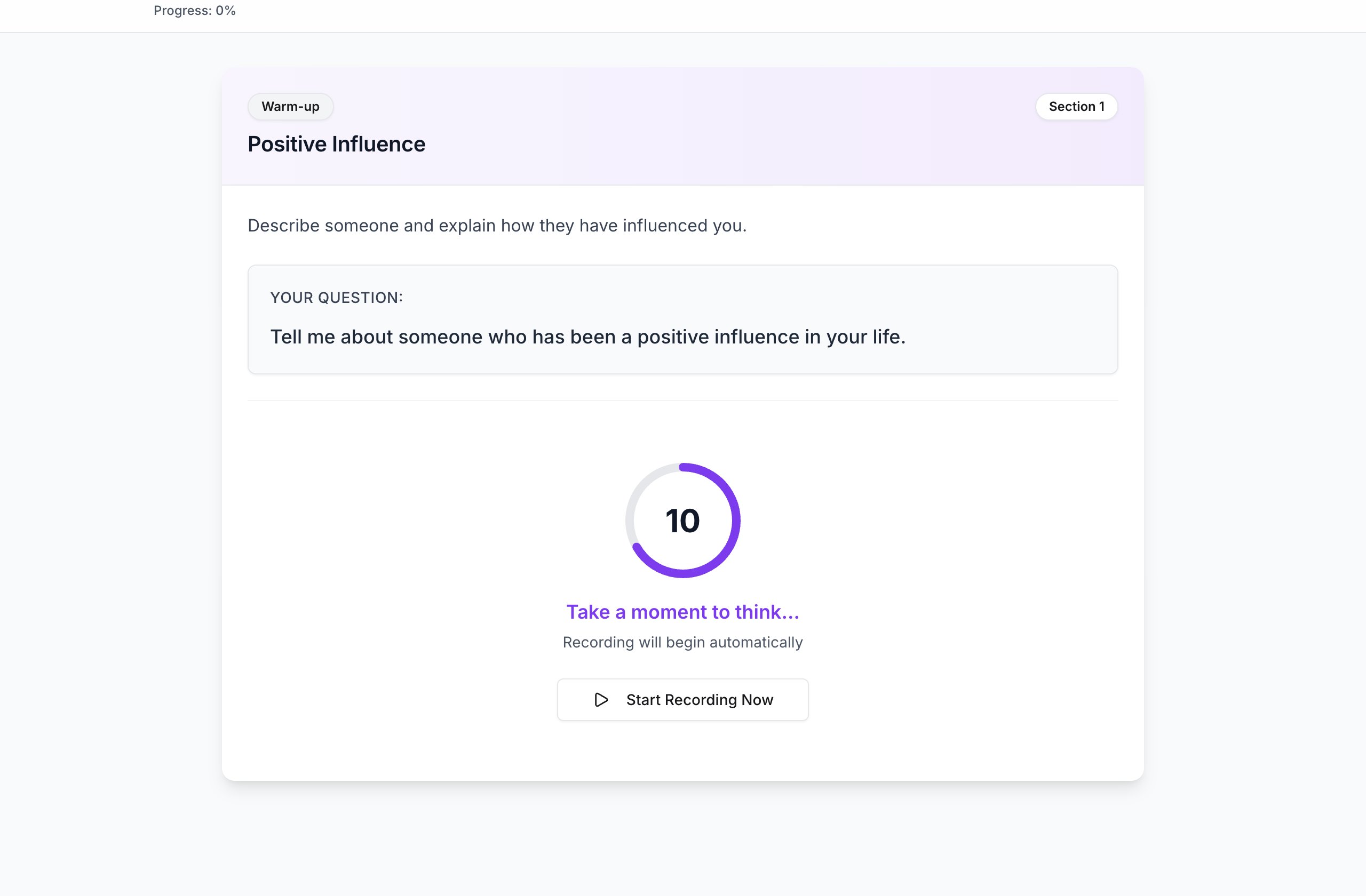
A conversation starter during thinking time. Recording begins when the countdown reaches zero.
The three sections
Section 1: Conversation starters
Two warm-up questions on everyday topics. The candidate gets 15 seconds to think, then recording starts automatically. The first answer allows 40 seconds, the second 55. These ease people in and give a baseline before the harder material.Section 2: Extended response
One longer question, either a topic to discuss or a realistic situation to respond to. 15 seconds to think, 80 seconds to answer. This is where range shows: can they structure an argument, handle an unfamiliar subject, and stay coherent past a few sentences.Section 3: Reading fluency
A short passage to read aloud. 10 seconds to prepare, 50 seconds to read. Because we know exactly which words they are producing, this isolates pronunciation and rhythm from vocabulary and grammar.Things candidates often ask about
Recording starts on its own when thinking time ends, and submits on its own when time runs out. A candidate who is ready early can choose Start Recording Now. There is no way to re-record or play an answer back.